London Picture Archive
We reproduce here 5 photographs and descriptions from the London Picture Archives showing Ennismore Gardens houses, interiors and views from former times.
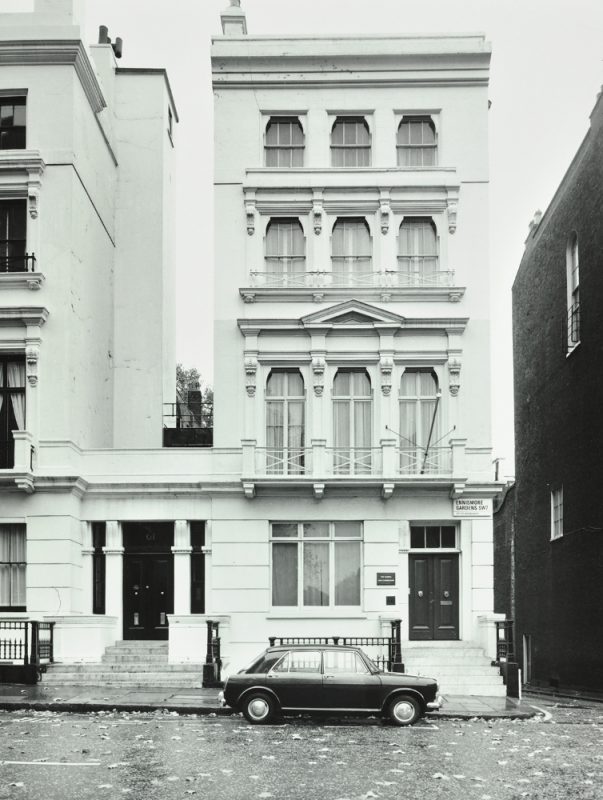
House in Ennismore Gardens, 1974
Image Source: © The London Archives (City of London), Record No 135685
Description
Front elevation of 60 Ennismore Gardens, Knightsbridge, originally Ennismore Place. Ennismore Gardens run south from Kensington Road to Ennismore Garden Square, built in the grounds of Kingston House in the mid-nineteenth century. Part of a mid nineteenth century four-storey terrace in stucco, with basements, by John Elgar, a speculative builder. Cast-iron first- and second-floor balconies. The terrace is Grade II listed, listing number 1066816. A sign on the wall by the entrance for ‘The Gambia High Commission’. A car is parked outside. The building is now part of the Libyan Embassy.
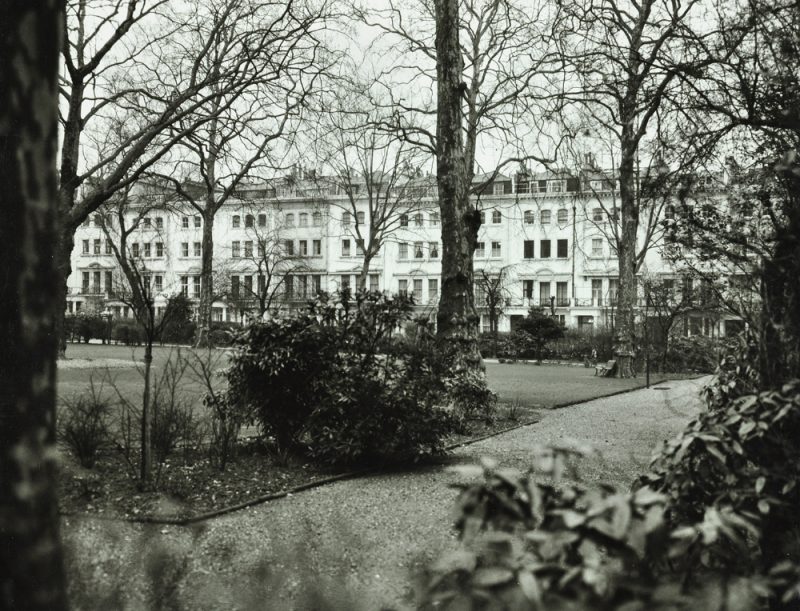
Houses in Ennismore Gardens, 1966
Image Source: © The London Archives (City of London), Record No 135593
Description
Front elevation of 47-54 Ennismore Gardens, Knightsbridge, looking east across the garden square. Ennismore Gardens run south from Kensington Road to Ennismore Garden Square, built in the grounds of the Kingston Estate in the mid-nineteenth century. This four-storey terrace in stucco on the east side of the square, originally Princes Terrace, was built in the 1840s by John Elgar, a speculative builder who was the main freeholder. Mansard attics to some houses, projecting porches with Doric columns. Cast-iron balconies to the first floor, and cast-iron railings enclose the basement areas. The terrace is Grade II listed, listing number 1066815. In 1891 at number 51 lived retired army officer Augustus Spencer. The son of 1st Baron Churchill, he lead his regiment at the Battle of Alma, the Battle of Inkerman and at the Siege of Sevastopol during the Crimean War. In retirement he lived with his wife, two of his five daughters, and seven servants.
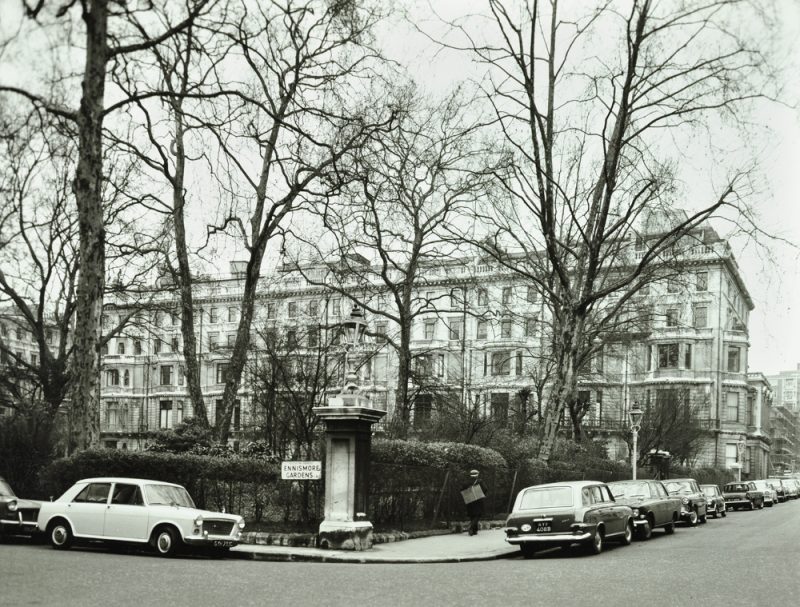
Houses in Ennismore Gardens, 1966
Image Source: © The London Archives (City of London), Record No 135596
Description
Rear elevation of 1-9 Ennismore Gardens, Knightsbridge, view across the gardens from the south-east corner. Ennismore Gardens run south from Kensington Road to Ennismore Garden Square, built in the grounds of Kingston House in the mid-nineteenth century. On the north side of the square with rear gardens leading directly to the garden square, a mid nineteenth-century five-storey terrace, with basements and some with mansard attics. Rear balustraded roof parapet. Houses faced with Portland stone salvaged by builders Thorn Brothers from Robert Mylne’s Blackfriars Bridge of the 1760s, which they had acquired as the demolition contractors a few years earlier. The terrace is Grade II listed, listing number 1211572. This was the first part of the square to be developed. Number 7 was originally the Thorn Brothers site office but by 1891 it was occupied by Allen Harvey Drummond a banker of Drummonds Bank, his wife, mother, two daughters and 11 servants. In the foreground, the pier in the south-east corner of the central garden is mid-nineteenth century in Portland stone, surmounted by a lamp with a polygonal lantern. It is Grade II listed, listing number 1211637. Two nineteenth-century cast-iron lamp standards with Nico lanterns. One on the opposite pavement to number 51, Grade II listed, listing number 1357003, and another on the opposite pavement to number 59 is Grade II listed, listing number 1066812. A number of vehicles are parked on the square.
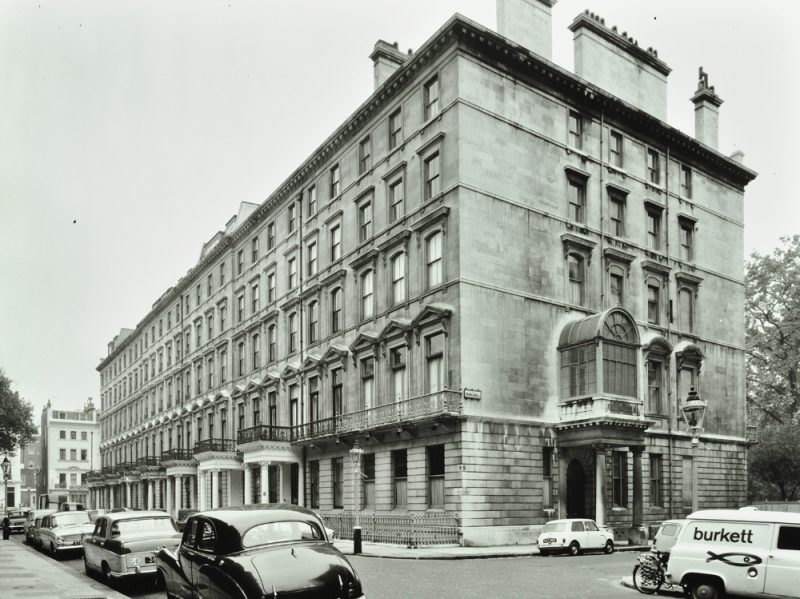
Houses in Ennismore Gardens, 1962
Image Source: © The London Archives (City of London), Record No 135587
Description
Front elevation of 1-9 Ennismore Gardens, Knightsbridge. Ennismore Gardens run south from Kensington Road to Ennismore Garden Square, built in the grounds of Kingston House in the mid-nineteenth century. On the north side of the square with rear gardens leading directly to the garden square, a mid nineteenth-century five-storey terrace, with basements and some with mansard attics. Projecting porches with Corinthian columns, and a continuous cast-iron balcony to the first floor. Messrs Benham, of Cadogan Works, Chelsea supplied the balconies and railings. Entrance to number 9 at the side with an enclosed balcony above. Houses faced with Portland stone salvaged by builders Thorn Brothers from Robert Mylne’s Blackfriars Bridge of the 1760s, which they had acquired as the demolition contractors a few years earlier. The terrace is Grade II listed, listing number 1211572. Outside number 9, a nineteenth-century cast-iron lamp standard with a Nico lantern, which is Grade II listed, listing number 1066843. This terrace was the first part of the square to be developed. Number 7 was originally the Thorn Brothers site office but by 1891 it was occupied by Allen Harvey Drummond, a banker of Drummonds Bank, his wife, mother, two daughters and 11 servants. A number of vehicles are parked on the street including a van with a fish motif, Burkett. This was the largest fishmongers in London, situated on the Brompton Road opposite Harrods.
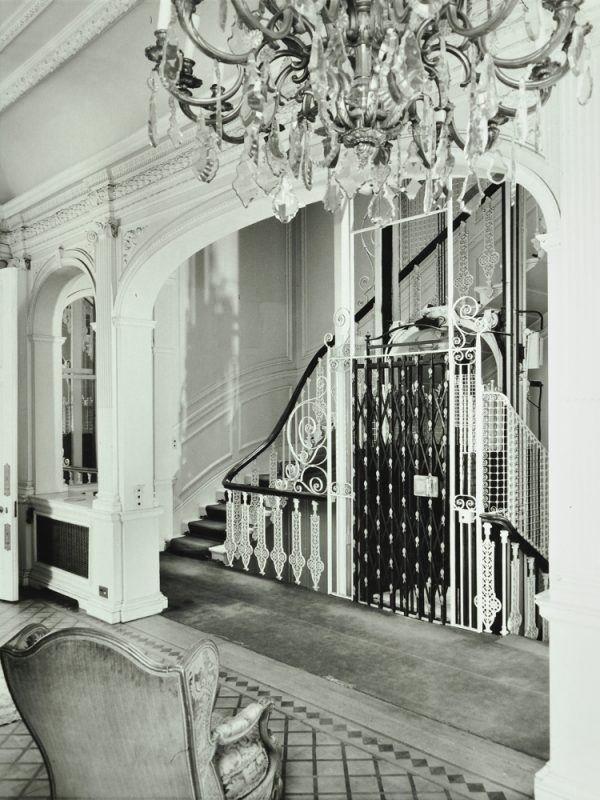
Interior of a house in Ennismore Gardens, 1971
Image Source: © The London Archives (City of London), Record No 135618
Description
First-floor interior of a house and landing at 9 Ennismore Gardens, Knightsbridge. Ennismore Gardens run south from Kensington Road to Ennismore Garden Square, built in the grounds of Kingston House in the mid-nineteenth century. Number 9 is the end house of a mid nineteenth-century five-storey terrace on the north side of the square, with rear gardens leading directly to the garden square. The terraced numbers 1-9 are Grade II listed, listing number 1211572. Portland stone interior of a house with cast-iron painted decorative balusters, and curved wooden handrail. Decorative cage lift in the central stairwell. An arch to the landing with Corinthian pilasters and decorative plasterwork. Among the craftsmen known to have worked on the house was the carver and gilder Charles Moxon of Brook Street, the plasterwork was by William John Taylor of Church Street, Chelsea. An armchair on the landing, and a chandelier. In the nineteenth century this was the London home of Sir John Tomlinson Brunner, 1st Baronet, a British chemical industrialist, Liberal Party politician, and philanthropist. Born in Liverpool of humble origins, he was self-made man. He married twice and had nine children. His descendants include the HRH Duchess of Kent, and the Liechtenstein royal family.